
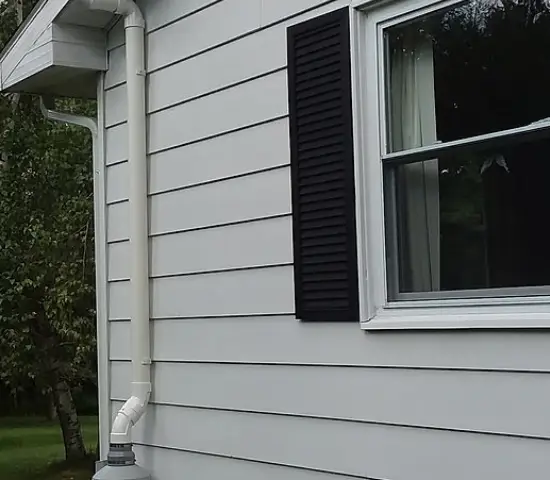
American vs. Canadian Radon Systems
Radon mitigation has two systems that can perform the same basic function, but they can be designed very differently. This is especially true if one compares the traditional American and Canadian models.
Both systems utilize a sub-slab depressurization method to draw radon from beneath a home and vent it outdoors. The main difference is the location of the radon fan and termination of the vent pipe.
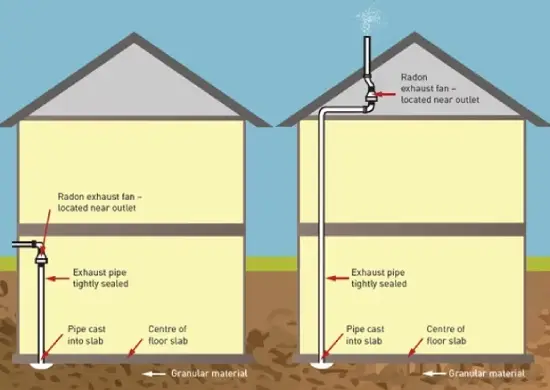
The fan is usually installed outside the house, in the American style, with the exhaust duct going up, mostly over the roof. The Canadian system generally has the fan inside, often in an unfinished basement or mechanical room, and venting the radon horizontally through the rim joist at or near ground level.
These distinctions arose from practical considerations, especially the effects of cold weather on outdoor equipment. Understanding the operation of each system can help a homeowner make a more informed decision about their own radon mitigation system.
How American and Canadian Radon Systems Differ
- Both systems are designed to achieve the same basic purpose: to create negative pressure under the building and to continually draw radon-laden soil gas away from the living space.
- The important difference is what happens to that air after it is drawn from under the foundation.
- In a typical American style system, a pipe runs through the basement floor, the outside wall, connects to an outdoor fan, then runs up the outside of the home and exhausts above the roof.
- In a Canadian-style system, the fan is located inside the building envelope, typically in an unfinished basement. The exhaust then exits through the rim joist and ends at ground level much like a dryer vent.
- This is especially important in cold weather conditions. An outside radon vent can collect condensation which freezes in the pipe and eventually builds up an ice cap.
American-Type Radon Systems
The American approach has been used throughout the United States for decades and remains the system many homeowners are most familiar with.
A typical installation places the fan outside the home and routes the vent pipe above the roof.
There are also practical drawbacks to consider. Exterior fans and exposed vent pipes are subject to snow, ice, rain, temperature changes, and physical damage.
Exterior fans may have a shorter service life than properly installed interior fans because they are exposed to harsher conditions. The longer piping also makes maintenance more difficult.
Canadian-Type Radon Systems
The Canadian approach developed in part because of the problems cold weather can create for exterior radon fans and long exposed vent pipes.
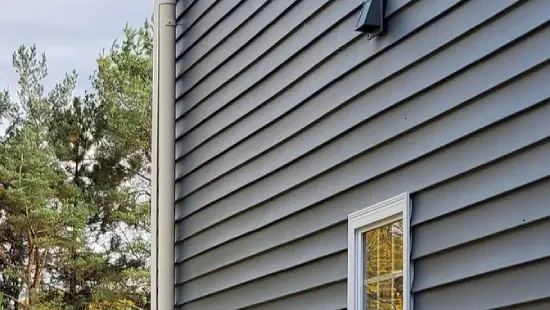
The fan is generally installed inside an appropriate unfinished area of the home, while the exhaust pipe exits through the rim joist and ends near ground level. So, there is significantly less exposed piping vulnerable to freezing.
This also reduces the amount of exterior material required and makes the fan easier to access for future service or replacement.
This approach is also less visually prominent. The exterior portion can resemble a small exhaust termination.
Which Radon System Is Right for Your Home?
Choosing between these radon mitigation systems is more complicated than simply asking which country uses which.
The existing standards in the US and Canada differ in specific areas. Canada allows fans inside suitable non-living areas and discharges at ground level, while American guidance has historically required the exhaust fan to be outside the living area and uses above-roof discharges.
For homeowners in Central New York, there is another consideration: local and state requirements may affect which system can be installed by a contractor.
At A Best Radon Systems, we believe homeowners should understand these differences before choosing. There is no reason to choose a system simply because it is the one they have seen before.
- Radon Quote
Get a Custom Radon Quote in Under 2 Minutes
Select your service type below to calculate an accurate, no-obligation estimate for your home.