
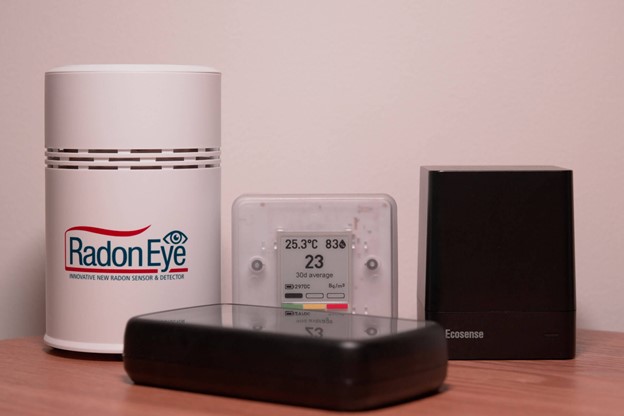
A radon monitor sits quietly on a shelf and says nothing until something goes wrong. That silence is the real problem. Radon is an odorless gas that rises from the soil into basements and living spaces, and you will never see or smell it. Many homeowners in Central New York learn about it only after a home inspection turns up a high number. A good monitor changes that by showing you real readings every day. Buy a digital radon monitor online, and you will find dozens of models in similar boxes with very different performance.
Radon testing products online range from basic gadgets to devices that track trends for months. These eight features will help you tell them apart before you spend anything.
Sensor Type and Accuracy
Most home monitors use either an ionization chamber or a semiconductor sensor. Both can work well, but they behave differently at low radon levels, which is where most homes sit. Look for a published accuracy range, ideally within ten percent of a reference reading. If a seller hides this number, take that as a warning sign. A monitor that guesses is worse than having none, because it hands you comfort you have not earned. Also ask how the sensor handles damp air, since humid basements can skew some readings.
Short Term and Long-Term Readings
Radon levels swing from day to day with weather, wind, and how often doors open. A single day tells you very little. Good monitors display a short term average, usually over one or seven days, along with a long-term average that builds over months. The long term figure is the one that reflects what your family actually breathes. Check that the device shows both without needing a manual reset, because a number you can read at a glance is a number you will actually act on.
Calibration and Testing Credentials
A monitor is only as trustworthy as its calibration. Reputable models are checked against a known radon chamber before they leave the factory, and the maker should say so plainly. Look for mention of recognized proficiency programs or independent lab testing. These details separate serious equipment from a novelty gadget. If the product page offers vague claims like highly precise without naming any testing process, move on. Calibration also drifts over time, so find out whether the manufacturer recommends rechecking and how that process works.
A Display You Can Actually Read
It sounds minor until you stand in a dim basement squinting at tiny gray digits. Choose a screen with clear numbers, decent contrast, and a backlight if your device will live in a dark corner. Units matter too. In the United States, radon is measured in picocuries per liter, and the action level set by the EPA is 4.0. Your monitor should show that unit by default, not bury it in a menu. Simple beats clever here, every time.
Data Logging and App Support
Numbers on a screen are useful. Numbers saved over weeks are far more useful. A monitor with built in memory lets you look back at patterns, such as spikes after heavy rain or during winter when the house stays sealed. Some models sync with a phone app and chart everything automatically. That helps if you are comparing readings before and after a repair. Make sure data can be exported or at least viewed without a paid subscription, because a locked history is not much of a feature.
Alerts That Get Your Attention
A monitor in the basement does no good if you only check it once a month. Look for an audible alarm or a phone notification that triggers when readings pass a level you set. Better yet, choose a model that lets you adjust the threshold rather than locking you into one number. A loud alert at two in the morning may feel annoying, but it is exactly what a safety device should do. Test the alarm when it arrives so you know what to expect.
Power Source and Battery Life
Radon testing is a patient process, and a monitor that dies midway wastes your time. Check whether the unit runs on batteries, a wall adapter, or both. Battery models offer flexible placement, though you should confirm how many months a set lasts. Plug in models need an outlet nearby, which can be tricky in a utility corner. A backup battery is a smart extra, since a power cut during a storm is when radon readings can change quickly and you most want continuous data.
Warranty, Support, and Return Policy
Even a well-made device can arrive faulty or fail after a year. A clear warranty tells you the maker stands behind it. Two years is a respectable baseline. Check how support works too, whether by phone, email, or chat, and how quickly they reply. A fair return window matters when you buy online, since you cannot hold the unit before it arrives. Reading a few honest reviews about service experiences often tells you more than the spec sheet does.
Conclusion
A radon monitor earns its place only when it is accurate, easy to read, and backed by a seller who answers questions. Take a little time to compare the features above, and your home will be better protected for years.
At A Best Radon Systems, we help families across Central New York understand what is in their air. When you want to buy a digital radon monitor online, our team will guide you toward a reliable model, and our range of radon testing products online keeps the choice simple. Reach out to us today and let us help you test with confidence.
FAQs
Do digital monitors replace professional radon testing?
They are excellent for ongoing tracking, but a professional test is often needed for real estate deals. Both work well together.
Can a radon monitor detect problems with a mitigation system?
Yes, a rising trend after installation can point to a fan problem. Regular monitoring helps you catch it early.
How often should a monitor be recalibrated?
Many manufacturers suggest checking every one to two years. Follow the instructions that come with your specific model.
Is it safe to buy a used radon monitor?
It can be risky, since you cannot confirm its calibration history. A new unit with a warranty is the safer choice.
Does weather affect radon readings?
Yes, barometric pressure, rain, and frozen ground can all change levels. That is why long-term averages matter more than a single reading.