
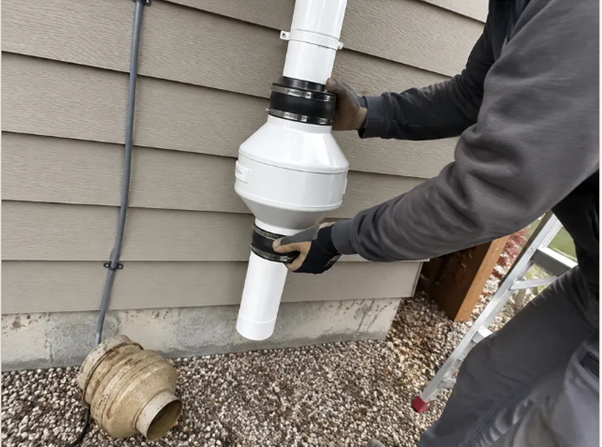
Your radon fan has one job, and it never takes a day off. It runs around the clock, pulling radon gas from beneath your home and pushing it safely outside. When it gets louder, you notice. When it gets weaker or stops, you probably won’t, and your family keeps breathing the gas the fan was meant to remove. Most homeowners put off the swap because of the radon mitigation system fan replacement cost, and that worry is fair.
This blog covers what you actually pay for, what you get back, and how to tell when the time has come. We also explain why radon monitoring services in Central New York matter once the new fan is running.
How Long a Radon Fan Really Lasts
Most radon fans run somewhere between five and fifteen years, depending on the model and how hard it works to pull air through your soil. The motor spins every minute of every day, and moisture, dust, and temperature swings wear it down.
Unlike a furnace, a fan won’t leave you shivering when it fails. It just gets weaker, and weaker is hard to spot.
Signs Your Fan Is Asking for Help
Start with your ears. Grinding, rattling, or a heavy hum usually means the motor is struggling.
Then look at the gauge on your pipe, the small tube with colored liquid inside. If the liquid sits level, the fan is not creating suction. Ice buildup in winter, water around the housing, or a fan that feels hot to the touch also deserve a call.
One sign is worth a check. One or two together mean you should not wait for a convenient weekend.
What Replacement Actually Costs
The radon mitigation system fan replacement cost depends on the fan model, how easy the pipe is to reach, and whether the wiring needs attention.
In many homes, it lands well below the original installation price, because the pipes, the suction point, and the electrical connection are already in place. A technician swaps the unit, seals the joints, and confirms the suction, often in about an hour. Ask for a written quote that names the fan and lists labor, so you can compare offers fairly.
What You Get for Your Money
A new fan restores the suction your home was designed to have. It also comes with a warranty, which your old unit lost years ago.
Newer models tend to run quieter and sip electricity, usually about what a couple of light bulbs use. Spread the price over ten years and the yearly cost is small next to other systems you depend on. And you stop wondering whether that gauge looks right.
The Cost of Waiting
Radon has no color and no smell, and the EPA ranks it as the second leading cause of lung cancer in the country. Parts of New York are known for elevated levels, especially in winter when houses are sealed tight.
A weakening fan does not switch your protection off with a click. It fades slowly, which makes waiting the most expensive choice. The harm builds quietly while you save a few dollars.
Repair or replace?
Sometimes the real problem is a loose coupling, a blocked pipe, or a tripped breaker, and a small repair solves it.
If the motor itself is failing, a repair only buys time. A fan past its tenth year, or one that has already been fixed once, usually makes more sense to replace. A technician can sort this out quickly by checking suction and airflow.
Test After You Replace
A new fan is only half the story. You want proof it works.
A short test kit gives you a snapshot, but radon levels shift with seasons, weather, and how you use your home. That is where radon monitoring services in Central New York earn their place. Ongoing readings catch a rise before it becomes a problem and show that your system holds steady year after year. Think of it as the receipt for your repair.
Picking the Right Professional
Look for a certified technician who explains your options without pressure and tests before and after the work. Ask whether the fan is rated for your home’s size and soil, since a mismatch wastes money.
Local experience counts too. Crews who work here know how frozen ground and long winters affect venting. Be careful with anyone who quotes a firm price over the phone without seeing your setup.
A Simple Way to Decide
Ask yourself three things. How old is the fan? Is it noisy, or does the gauge look off? When was your last radon test?
If the answers make you uneasy, replacement is a sound investment. If everything checks out, keep monitoring and revisit the question every year.
Conclusion
Replacing an old radon fan is a modest expense that protects the air your family breathes every day. Pair the new fan with regular testing, and you will know your home is staying safe.
At A Best Radon Systems, we replace worn fans quickly and explain our pricing clearly, so the radon mitigation system fan replacement cost never comes as a surprise. Our team also offers radon monitoring services in Central New York to keep your results on track long after the job is done. Call us today and let us restore your protection.